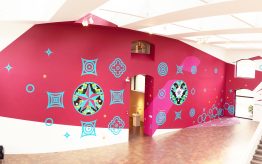
The 2025 Connected Learning Summit convened a global community of over 500 educators, researchers, and innovators online and in person at eight locations internationally for a powerful exploration of the intersections between technology, learning, and equity. This year’s keynotes and panels challenged us to critically examine the landscape facing today’s learners from supporting neurodivergent youth in overcoming educational barriers to helping young people navigate the AI systems shaping their daily lives.
It was our largest event to date, and we are thrilled to announce that full video recordings of our plenary panels and keynote talks are now available on YouTube.
Opening Keynote: Supporting Neurodivergent Learners in a (Dis)Connected World
 | Dr. Meryl Alper (Northeastern University) opened CLS2025 with a compelling examination of how connected learning frameworks can better support neurodivergent youth. Drawing on extensive research with disabled children and adolescents, including insights from her recent book Kids Across the Spectrums: Growing Up Autistic in the Digital Age (MIT Press), Dr. Alper challenged the technocentric approach to educational inequality that has historically deepened divides rather than bridging them. |
Keynote: The Biff World, or Speculative Writing as Time-Travel to Heal the Present
| Award-winning writer Vanessa Angélica Villarreal delivered a craft talk that bridged creative writing, pop culture, and political resistance. Villarreal, author of the National Book Award-longlisted Magical/Realism: Essays on Music, Memory, Fantasy, and Borders, demonstrated how speculative nonfiction allows creators to combat alternate realities and restore memory to popular culture. |  |
Drawing on contemporary works like Beyoncé’s “Cowboy Carter” and Bad Bunny’s “Debí Tirar Mas Fotos,” she highlighted the critical role of educators as diligent record-keepers, particularly in a political moment where history faces deliberate rewriting.
Plenary: Youth Mental Health and Technology
 | One of the summit’s most timely discussions featured Dr. Emily Weinstein (Center for Digital Thriving, Harvard), Cynthia Breazeal (MIT), and student panelist Rosie Baker in a conversation about growing up in a connected world. Moderated by Scot Osterweil (Education Arcade, MIT), the panel explored the dual nature of smartphones, social media, and AI in young people’s lives. |
The conversation acknowledged both the upsides – enabling youth to organize, create, and build community – and the challenges of stress, misinformation, and disconnection. The panel centered youth perspectives in shaping the digital future, with Baker bringing firsthand experience to complement the research insights from Weinstein and Breazeal.
Plenary: Engaging Technologies as Tools of Resistance, Dignity, and Respect
| Moderated by Kris D. Gutiérrez (UC Berkeley), this interactive plenary featured José Lizarraga (UC Berkeley), Sepehr Vakil (Northwestern), and Antero Garcia (Stanford) in a dialogue about their boundary-pushing works. |  |
This session expanded our imagination regarding technology’s role in a democratic society, weaving together three threads: studies of Black STEMinist Pedagogies by Black women STEM teachers, a cultural and political account of Sharif University and technology in Iran’s political history, and an examination of the relationship between digital platforms and literacies in the educational and media ecosystem.
Closing Keynote: AI Literacy for All: Teaching & Learning from Youth Auditing Black-Box AI Systems
 | Dr. Danaé Metaxa (University of Pennsylvania) closed CLS2025 with a forward-looking talk on the necessity of preparing young people to critically evaluate the AI systems they encounter daily. Dr. Metaxa argued that K-12 computing education must expand beyond programming to include comprehensive AI literacy. |
They described their work developing AI auditing – a method experts use to interrogate black-box AI systems – into an educational framework appropriate for youth. This approach offers vital insights not only for K-12 education but also for the broader field of ethical AI auditing.
Thank You to Our Sponsors
We would like to thank our hosting and sponsor organizations, whose generous support made CLS2025 possible:
- Connected Learning Lab (UC Irvine)
- Lifelong Kindergarten Group (MIT Media Lab)
- MIT Scheller Teacher Education Program & Education Arcade
- Center for Digital Thriving (Harvard Graduate School of Education)
- Prolepsis Design Collaborative (UC Berkeley)
- Utah State University – Department of Instructional Technology & Learning Sciences
- Stanford Graduate School of Education
- Learning Games Network (MIT Media Lab)
Stay Connected
Stay tuned for more highlights from CLS2025 in the coming weeks, including guest posts, project spotlights, and research deep dives.
The Connected Learning Summit brings together leading researchers, educators, and developers to fuel a growing movement of innovators harnessing the power of emerging technology to expand access to participatory, playful, and creative learning. For the latest in CLS news, visit our website, subscribe to our newsletter, and follow us on Linkedin to join the Connected Learning conversation.